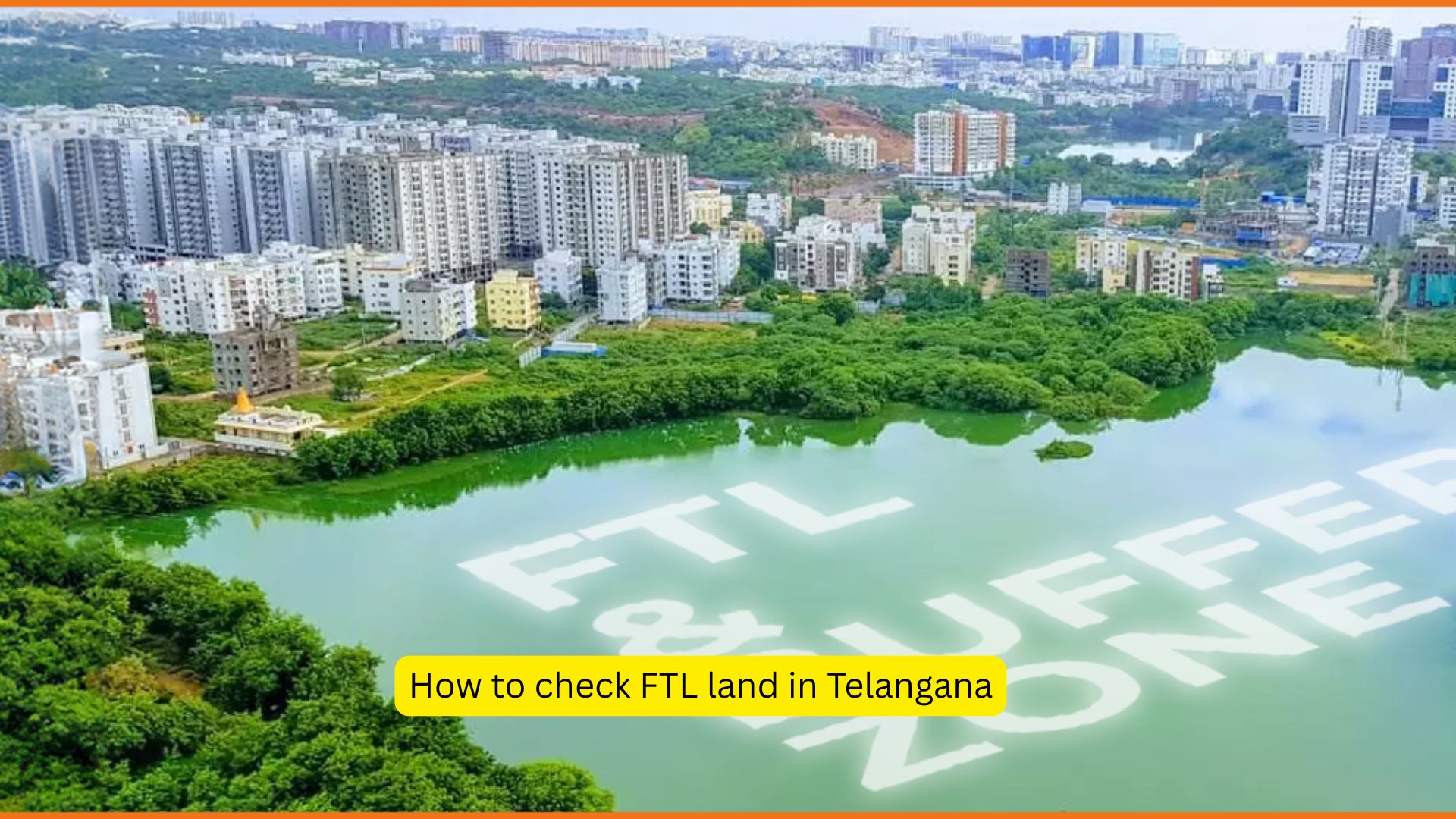
The purchase of land in Telangana is an exciting move towards building your dream home or an investment with savvy. But many buyers don’t consider one of the most important factors known as the FTL (Full Tank Level). If the land you buy is located within the FTL zone of a water or lake body, you could face significant construction and legal limitations later on.
In certain instances, structures built in these zones have been destroyed by authorities of the government. That’s why understanding how to verify FTL properties within Telangana is crucial before signing any contract for property.
In Telangana specifically in cities such as Hyderabad in Hyderabad, water and lakes bodies are protected by strict environmental laws. In Telangana, the Full Tank Level (FTL) represents the highest level of water an area can attain during intense monsoon or heavy rainfall. The land that lies in this area is considered to be sensitive and secured to avoid the risk of flooding and environmental destruction.
Government agencies regularly inspect these areas to prevent illegal encroachments and constructions that are not permitted. (Munsif News)
Many people purchase lots near lakes as it looks attractive or more affordable. However, they later discover that the construction is not allowed or even prohibited. The good news is that determining FTL status is now much easier because of digital land portals as well as GPS mapping software.
In this article you’ll discover exactly how to confirm that land is FTL in Telangana by using web-based portals and official documents, and the government offices. At the end of this guide you’ll know the best method to determine if an area is legally usable or not.
Understanding FTL Land in Telangana
What Does FTL Mean in Land Records
” “Full Tank Level (FTL) refers to the highest level of water the reservoir, lake or tank could attain when it is fully full. In simplest terms it defines the boundary of a body of water when the amount of rainfall is excessive and the storage of water reaches its maximum capacity. Land that is located within the boundary is considered to be part of the ecosystem surrounding the lake and is generally protected by laws.
In Telangana particularly in the vicinity of Hyderabad and the nearby districts there are a myriad of tanks and lakes are in existence which play an important part in the management of water. These bodies of water help to control flooding, replenish groundwater, and help maintain the balance of nature.
Because of these ecological functions the government is obligated to protect the area within the FTL boundaries. Development or construction in this zone is usually restricted because it may cause obstruction to natural drainage, and also increase the risk of flooding.
A plot near a lake appears gorgeous and peaceful. If the land is within the FTL boundaries, the government can declare it prohibitive or restricted property. Even even if sellers claim to own the property, the construction of structures on the land could lead to significant legal problems. In a few instances authorities have destroyed illegal structures to restore the lake’s boundaries and stop the encroachment.
This is the reason every home buyer needs to know the meaning of FTL is before committing to a purchase. Imagine it as the nature’s safety zone. If you cross this limit, your investment may be deemed dangerous. This is why knowing your FTL status of the plot is among the most important things you could do prior to purchasing the land Telangana.
Why FTL Land Matters for Property Buyers
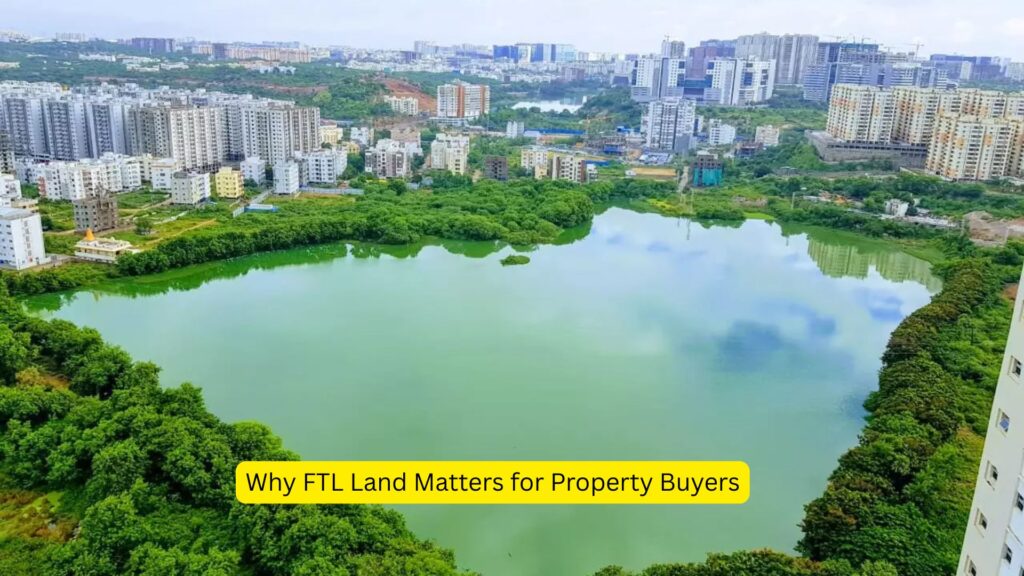
FTL land isn’t merely the technical term that is used by officials of the government. It directly affects property owners as well as builders and investors. When land falls within the FTL boundaries of an aquatic body, it is typically deemed not suitable for real estate development or construction development. The authorities enforce these rules to safeguard water bodies and decrease the risk of flooding during heavy rains.
In recent times, Telangana authorities have taken severe actions against illegal structures that are built in lake beds and inside FTL zones. A number of demolition drives were conducted to eliminate obstructions to natural flow of water. These initiatives show how serious the government takes the preservation of reservoirs and lakes. (Munsif News)
If you are a buyer, that could mean not paying attention to FTL verification may result in losses in money. Imagine spending millions of dollars on property only to find later that the construction was illegal. In certain situations, banks will not lend loans to properties situated in restricted areas. This can make resales and development a challenge.
A different factor FTL has significance is the future cities’ planning. Many real estate projects fail or face delays because developers didn’t check lake boundaries properly. If authorities later determine that the project is located in an FTL zone, then approvals could be denied. This is the reason professional surveyors and lawyers for property always suggest checking the status of FTL prior to buying property.
The process of checking FTL land status isn’t only about complying with rules, it’s about safeguarding your investment and providing security. Simple verification steps could keep you from many years of legal troubles and financial anxiety.
Importance of Checking FTL Before Buying Land
Legal Risks of Buying FTL Land
When buying property in Telangana in Telangana, not checking whether it is within the FTL zone could lead to severe legal implications. The government has declared the lake bed and its the surrounding areas to be protected zones since they are vital for the storage of water and flooding management. If a person builds a house or commercial structure within the line, authorities could consider it as a trespassing violation.
The courts of Telangana have repeatedly affirmed the rule. In actual fact it is the Telangana High Court has said that encroachments of tanks cannot be regulated even by authorities of the government. This means that if you buy an area within the FTL limit, you are unable to legally legalize it by paying fines or requesting approvals. The structure might still be subject to demolition orders.
Another legal issue is that land located in FTL zones is often included in the lists of prohibited or restricted land that are maintained by the Revenue Department. These lists are used in the registration of properties and government verification procedures. If your property is listed in these lists, the process of the transfer of ownership or getting permission to construct becomes extremely complicated.
This can create an illegal trap for buyers who solely rely on the claims made by sellers without verifying the official land documents. Real estate fraud can involve selling plots within FTL zones at a lower price in order to draw buyers. In the absence of proper verification, buyers could buy land that is not legally able to be used for construction.
Experts strongly suggest checking FTL status via the government portals such as cadastral maps, official survey documents. Consider it as an insurance policy before you make an important financial decision. A few minutes spent confirming the details of your land today could keep you from costly legal fights in the future.
Environmental and Government Restrictions
FTL restrictions aren’t only about property laws, they are also about securing the environment as well as public security. Reservoirs and lakes act as natural flood control mechanisms.
If heavy rains occur they hold excess water and protect nearby zones from being flooded. If construction is a hindrance to these water channels that are natural the chance of flooding can be significantly increased.
To avoid this issue to prevent this from happening, to prevent this from happening, the Telangana government has enacted strict rules for areas close to lake bodies and other water sources. The land that is that is within of the FTL boundary as well as the buffer zones is closely monitored by various agencies such as HMDA along with the Irrigation Department. These agencies regularly inspect these areas and eliminate illegal structures that do not comply with the rules of nature.
Another reason why these restrictions are in place is preservation of groundwater. Lakes play an important function in the recharge of underground sources of water. If construction occurs within FTL zones, it disrupts this natural process and decreases the amount of water available in the surrounding regions. In time, this could cause water shortages in urban areas.
Monitoring programs and government initiatives have also heightened awareness among potential buyers. According to official reports increasing numbers of people are checking FTL as well as buffer zone information prior to purchasing land in order to ensure that there are no legal issues. (NewsMeter)
Understanding these regulatory and environmental aspects helps buyers make educated choices. A property that appears appealing now could pose a problem when it’s located within designated ecological areas. The process of checking FTL status will ensure that the property you purchase is in compliance with both environmental and legal rules.
Methods to Check FTL Land in Telangana
Checking Through HMDA Lakes Portal
One of the simplest methods to determine if the land you own is in one of the FTL zone or buffer zone is through the HMDA Lakes Portal. The online tool was developed in Hyderabad Metropolitan Development Authority Hyderabad Metropolitan Development Authority to provide clear information on reservoirs, lakes, as well as the land parcels that are near. Users can visualize the boundaries of lakes FTL limits, lake boundaries, and buffer zones on a dynamic map.
This portal is especially helpful for properties in Hyderabad and its surrounding metropolitan regions. If you are searching for a specific village or lake the portal displays details about the area of the lake such as its, FTL perimeter length, and the nearby survey numbers. This allows prospective buyers to determine if their property is within or outside of the boundary.
The map employs different colored lines to mark different zones. The blue line is what is known as the FTL boundary and the red lines represent the buffer zone that surrounds Lake. If you can compare the survey number of your plot to these boundaries that you can identify the distance between it and the body of water.
Step-by-Step Guide to Use HMDA Portal
If you’d like to determine FTL land with the HMDA portal take these steps:
- Go to your HMDA Lakes Portal website.
- Choose which District, Mandal as well as your village.
- Input the lake’s name, or the close by landmark.
- Explore on the interactive map of FTL zones and buffer zones..
- Verify that you survey number is located within your FTL border.
The portal offers quick and easy visual confirmation, and is frequently the first step taken by buyers of property as well as real estate agents when confirming the land around lakes.
Using the Dharani Land Records Portal
Step-by-Step Process on Dharani
Another method of confirming FTL land is to use The Dharani Portal, which is the official land records database of the Telangana government. The portal provides precise cadastral maps as well as ownership records for non-agricultural and agricultural land throughout the state.
To verify FTL status with Dharani begin by going to the portal and choosing to go into the Cadastral Maps section. After you enter the details like district division, mandal as well as village information, Dharani shows an interactive map that shows survey numbers as well as land classifications. These maps assist in determining if the plot is located within the boundaries of restricted zones such as canals, lakes or FTL zones. (Telangana NavaNirmana Sena)
The benefit that comes with this Dharani portal is the way it links land records to official databases of the government. This means that the data is considered to be legally trustworthy to verify property ownership. Buyers are able to verify ownership details as well as the type of land and the boundaries surrounding it prior to buying.
However, understanding the cadastral map may require some the basics of understanding land measurements and survey numbers. If you find the map to be confusing it is possible to cross-check the data with local tax officers or surveyors licensed by the state. This will help you know whether the land is within the FTL boundary or is outside of the zone of restriction.
Using ISRO Bhuvan Mapping Portal
Satellite technology also makes it simpler to confirm the boundaries of land and water bodies. In addition, the Bhuvan Portal, created by ISRO is a high-resolution satellite maps which allow users to map areas of land across India. With this portal you can see reservoirs, lakes, as well as land parcels in the vicinity.
To determine FTL property using the Bhuvan portal, begin by clicking on your Telangana Region on the Map. Find the region in which your property is. Zooming in on the map, you’ll be able to view nearby water bodies, and check their boundaries against the number on your survey for your plot.
This tool is especially helpful to cross-check verification. For instance, if you’ve previously looked up through the HMDA website or Dharani records The Bhuvan map will help you confirm the exact location. Satellite imagery helps to comprehend the geographic connection between land parcels as well as the lakes that surround them.
Although the website might not always display the exact legally-defined boundaries, it does provide an accurate overview of the geography that allows buyers to identify the potential risk. When combined along with the official records of land satellite maps are a useful verifiability tool.
Checking FTL Land Offline
Visit Tahsildar or Revenue Office
Online tools are helpful however, they can not be able to provide the complete information. In these cases it is recommended to visit your the local Tahsildar, or Revenue Office is the most reliable method to confirm the land status of FTL. These offices keep official land documents, survey maps and lists of prohibited land for every district or village.
If you visit the office, it is recommended to bring important details like details like the land survey number and the village name, mandal and district. Officials are able to use these data to determine whether the property is located inside that FTL boundaries or the buffer zone. Because these records are maintained through the state, they can be legal and valid for verification of property.
Another benefit of visiting at the Revenue Office is that you are able to direct questions to officials who know regional land classifications. They can tell you if the land is suitable to construct on or if restrictions are in place. This type of verification is particularly useful when investing in properties with a high value.
Verify Through Official Land Survey
If you are looking for absolute certainty that you are in the right place, you can apply for an government-issued survey of land. This involves making an application via an MeeSeva center or Dharani portal. Once the request has been accepted an authorized surveyor is allowed to visit the property and takes measurements of the boundaries of the land using official documents.
The surveyor evaluates his physical boundary of property with cadastral maps and FTL records. When the inspection is complete then an official report is issued to confirm whether the land is within the FTL zone or is outside of it. This report is used to confirm legality of construction permits, the transaction of property.
Professional surveys are especially useful when significant investments are involved. Real estate investors and developers typically rely on survey reports to ensure that their projects are compliant with regulations set by the government.
Understanding FTL and Buffer Zone Rules
FTL Zone Construction Rules
Construction along the FTL boundaries of reservoirs and lakes is usually forbidden in Telangana. These areas are considered to be part within the waters body, and therefore are protected in order to preserve the natural capacity of water storage. Any structures that are not authorized to be built in the zone could be subject to demolition order.
Authorities also oversee FTL zones to avoid activities that might harm the ecosystem. Disposing of debris or altering drainage channels or filling lakes with soil is a crime. This law ensures that lakes serve as natural flood control mechanisms.
Buffer Zone Restrictions
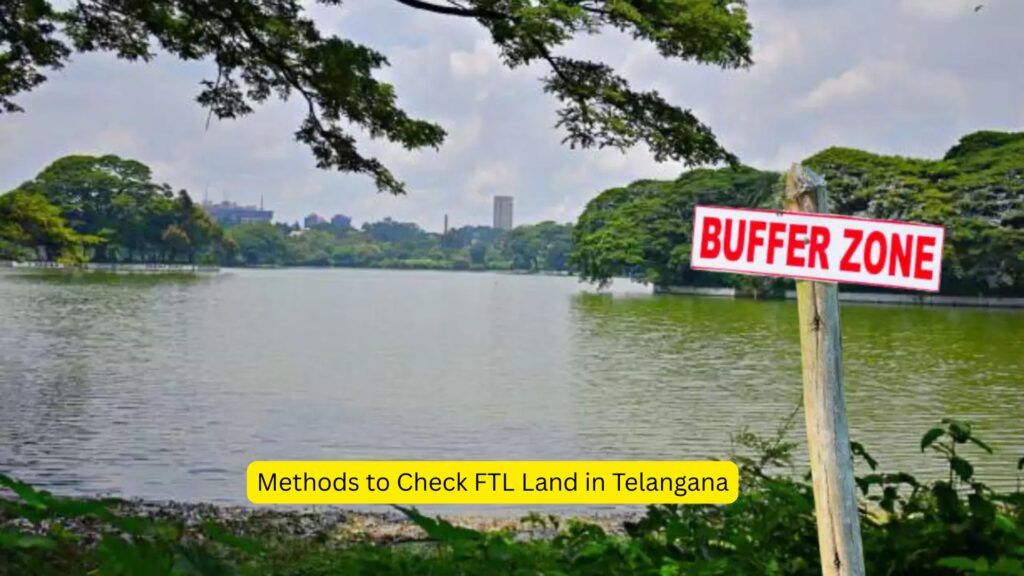
Alongside the FTL boundary in addition, there is an buffer zone that surrounds the lake. It serves as a buffer between the body of water and the nearby developments. Although some construction might be permitted in buffer zones, they usually have to adhere to strict rules and minimum distance minimum requirements.
For instance, houses are required to maintain a certain distance from the lake’s boundary in order to protect the environment. The exact distance can differ based of the dimension and class of the lake. By examining these guidelines prior to buying the land will ensure that it is in compliance with the zoning regulations.
Important Documents Required to Verify FTL Land
Survey Number and Land Records
A Survey numbers will be your most vital element to verify FTL land. It uniquely identify a piece of land in official documents. By entering the survey’s number in official portals or by presenting it to revenue offices, you will be able to get detailed information on the boundaries and classification of the land.
Other documents that aid verification are:
- Pattadar Passbook
- Encumbrance Certificate (EC)
- Registered Sale Deed
- Cadastral Maps
The records give the most precise overview of the ownership as well as land use classification and the legal status. The combination of these records ensures the property is secure to be invested in.
Tips to Avoid Buying FTL Land
Land near lakes can seem appealing however it needs careful examination. Here are some ways to avoid issues:
- Always confirm the FTL or buffer zone’s condition prior to purchasing.
- Look up the land records available by visiting Dharani as well as HMDA websites.
- Verify the information cross-checked in conjunction with the local tax officials.
- Avoid plots that are located close to canals or lakes.
- Engage an certified surveyor for property investments that are large.
These safeguards will protect you from legal disputes as well as financial loss.
Conclusion:-
The process of determining the FTL boundaries of properties within Telangana is a crucial procedure for anyone who is planning to buy property close to lakes tanks, lakes, or water bodies. FTL boundaries determine the highest level of water in the lake, and property within this zone is protected by environmental and legal rules. Land purchases without a valid permit could lead to serious problems such as legal disputes, construction bans and sometimes even demolish orders.
Thankfully, the process of verifying FTL land has become much easier thanks to modern digital tools. Platforms such as those of the HMDA Lakes Portal, Dharani land records portal as well as ISRO’s Bhuvan map system permit buyers to verify the boundaries of land and restricts quickly. These tools, when combined with surveys that are official and verification by the revenue office are a solid way to determine if a land parcel is suitable to develop.
The purchase of real estate is usually one of the most important financial decisions that people make. It is important to check FTL status guarantees that your investment remains safe and legally enforceable. Simple verification steps now can help you avoid serious issues in the future.
FAQs About FTL Land in Telangana
1. What exactly does FTL refer to what does FTL mean in Telangana Land records?
FTL (Full Tank Level) refers to the highest level of water that the reservoir or lake can attain. The land within the boundaries is considered to be a part of the body of water and is typically protected from the construction.
2. Can I build a home in FTL land?
No. Construction on FTL property is generally forbidden due to the fact that it affects the natural flow of water and can increase the risk of flooding.
3. Which site can I visit for checking FTL landing in Telangana?
You can search for FTL land with this portal, the HMDA Lakes Portal, Dharani land records portal or satellite maps similar to Bhuvan’s portal. Bhuvan Portal.
4. What’s the buffer zone in lakes?
The buffer zone refers to the space that surrounds the FTL border of the lake. The construction of structures is permitted however, it must be maintained at an appropriate distance from the body of water.
5. What do I do if my property falls in that FTL zone?
If your land is inside the FTL zone, it is recommended to seek advice from your local Revenue Department or legal experts to learn about any restrictions and possible legal options prior to creating any plans for development.