Surat, often called the “Gateway to the West of India,” has been a bustling port city for centuries. Its charm and significance attracted traders, travelers, and explorers from all over the world. But what made Surat so special that people traveled hundreds, even thousands, of miles just to reach it? Let’s dive into history, trade, culture, and geography to uncover why Surat was such a magnet for people from distant lands.
Surat, located in the western Indian state of Gujarat, is not just a city—it’s a story of commerce, culture, and connectivity. For centuries, it served as one of India’s most important ports, linking inland markets to the Arabian Sea. Imagine a city buzzing with ships, traders speaking dozens of languages, and merchants bargaining over silks, spices, and diamonds. That’s Surat in its heyday, drawing people from far and wide.
Strategic Location of Surat
Gateway to Trade Routes
Surat’s strategic location on the western coast of India made it an essential hub for maritime trade. It served as a connecting point for routes from the Indian subcontinent to the Middle East, Africa, and Europe. Traders knew that if they wanted access to India’s rich resources, Surat was the door to knock on.
Proximity to Major Rivers and Ports
The Tapi River flows through Surat, providing easy inland transport and linking the city to fertile hinterlands. Ships could dock safely, unload goods, and transport them inland without hassle. This combination of river and sea routes was a golden ticket for international merchants.
Surat as a Hub for Trade
Textile and Silk Industry
Surat was world-famous for its textiles. Muslins, silks, and fine cotton fabrics from Surat were highly sought after in Europe and the Middle East. Traders didn’t just come for the goods—they came for the expertise and craftsmanship that Surat offered.
Diamond and Gem Trade
Diamonds from nearby mines in Golconda passed through Surat’s markets, making it a hotspot for gem traders. European traders, in particular, flocked to Surat to procure these sparkling treasures.
Spices and Other Commodities
Pepper, cardamom, and other spices were another big draw. Spices were like gold in the global trade of that era, and Surat became a crucial node for spice exports.
Surat’s Connection with Foreign Traders
European Traders
The Portuguese were the first Europeans to set up trade relations in Surat, followed by the Dutch, British, and French. Each power recognized the city’s immense commercial potential and established factories and warehouses.
Arab Merchants
Arab traders had been visiting Surat long before Europeans arrived. They imported textiles, spices, and pearls while exporting Indian goods to the Middle East and North Africa.
Persians and Central Asians
Merchants from Persia and Central Asia were attracted not only by trade but also by cultural exchange. Many settled in Surat, creating a vibrant, multi-ethnic community.
Political Stability and Governance
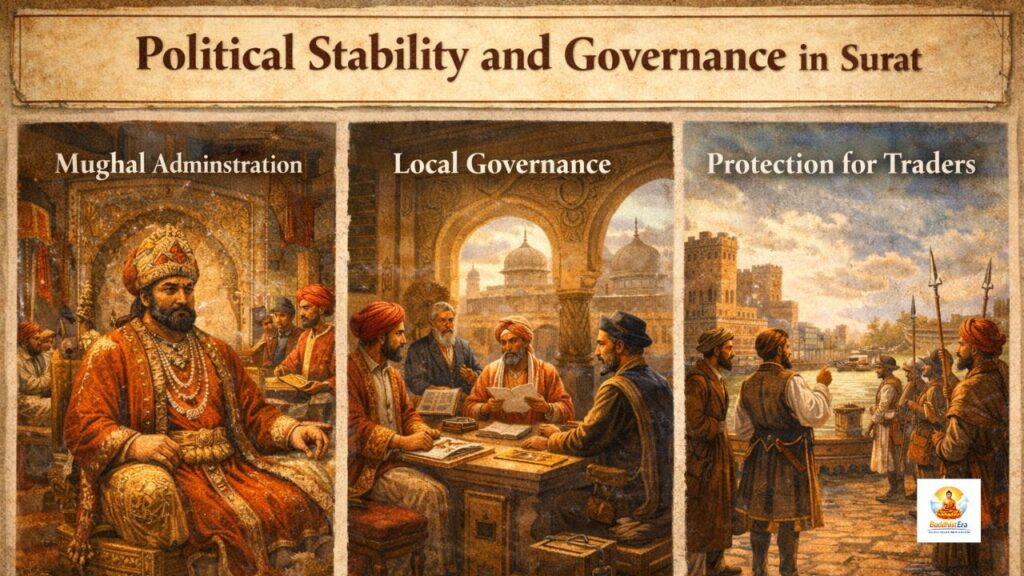
Mughal Administration
Under the Mughal Empire, Surat enjoyed relative political stability. The Mughals understood the economic importance of the port and ensured it was safe for foreign merchants.
Local Governance and Protection for Traders
Local authorities and merchants collaborated to maintain law, order, and infrastructure. This proactive governance reassured traders that their goods and investments were protected.
Surat’s Cultural Magnetism
Cosmopolitan Population
The city’s population was a mix of Gujaratis, Arabs, Persians, Africans, and Europeans. This diversity created a rich cultural environment, attracting scholars, artisans, and traders alike.
Festivals and Cultural Exchanges
Surat was not just about business. Festivals, fairs, and cultural events created opportunities for social and commercial interaction, making the city vibrant and appealing to outsiders.
Technological and Industrial Attractions
Shipbuilding and Port Infrastructure
Surat had advanced shipyards capable of building large ocean-going vessels. This technological edge attracted merchants who needed reliable shipping for their goods.
Innovations in Textile Production
Innovations like intricate weaving patterns and dyeing techniques made Surat’s fabrics unique, giving traders a reason to travel specifically to the city.
Surat’s Role in the Global Economy
Export-Import Dynamics
Surat was a crucial node in the global trade network. Cotton, silk, diamonds, spices, and more flowed through the city to Europe, Africa, and the Middle East.
Surat in European Trade Records
Historical records show that European trading companies kept meticulous records of transactions in Surat, highlighting its global significance.
Challenges and Triumphs of Surat
Natural Disasters and Recovery
Surat faced floods and epidemics, yet its resilient governance and strong trade networks ensured rapid recovery, maintaining its appeal for international merchants.
Competition from Other Ports
Even with emerging competition from Mumbai and other ports, Surat’s established reputation and infrastructure kept it relevant for centuries.
Legacy of Surat’s Cosmopolitan Appeal
Surat’s legacy is its ability to attract people from distant lands through trade, culture, and opportunity. Today, it remains a commercial hub, but its historical role as a melting pot of cultures continues to inspire travelers and historians alike.
Read also:-
Conclusion:-
People from distant lands visited Surat for one main reason: opportunity. Whether it was the allure of trade, the promise of rich cultural exchange, or the security offered under stable governance, Surat had it all. Its strategic location, vibrant economy, and cosmopolitan culture made it a magnet for centuries. Even today, the echoes of those ancient traders and explorers can be felt in the bustling streets and markets of Surat.
FAQs:-
Q1: Why was Surat called the “Gateway to the West of India”?
A1: Surat’s strategic coastal location and port facilities made it the primary entry and exit point for trade between India and the western world.
Q2: Which goods attracted foreign traders to Surat?
A2: Textiles, silks, spices, diamonds, and gems were the primary goods that drew merchants from across the globe.
Q3: Did Europeans settle in Surat?
A3: Yes, Portuguese, Dutch, British, and French traders established factories and settlements to facilitate trade.
Q4: How did Surat maintain its appeal despite natural disasters?
A4: Efficient governance, resilient infrastructure, and strong trade networks allowed Surat to recover quickly and continue thriving.
Q5: Is Surat still an important trade hub today?
A5: Absolutely. While the nature of trade has evolved, Surat continues to be a major center for textiles, diamonds, and commerce in India.