If you’re an NRI with roots in India, chances are you’ve thought about owning a piece of land back home. Maybe it’s emotional. Maybe it’s an investment. Or maybe it’s about staying connected to your ancestral village. But here’s the big question that keeps popping up: can NRI buy agricultural land in India?
Short answer? No, not directly.
Long answer? Well, that’s where things get interesting. Let’s break it down step by step, without legal jargon overload, and in plain, human language.
Understanding Who Is an NRI Under Indian Law
Definition as per FEMA
Under the Foreign Exchange Management Act (FEMA), a Non-Resident Indian (NRI) is an Indian citizen who lives outside India for employment, business, or any purpose indicating an intention to stay abroad for an uncertain period.
In simple words:
If you hold an Indian passport but live outside India most of the time, you’re an NRI.
Difference Between NRI, OCI, and PIO
People often mix these up, so let’s clear the air:
- NRI: Indian citizen living abroad
- OCI (Overseas Citizen of India): Foreign citizen with Indian roots
- PIO: Old category (now merged with OCI)
Why does this matter? Because land ownership rules differ for each.
Overview of Land Ownership Rules in India
Types of Land in India
India broadly classifies land into two categories:
Agricultural Land
Used for farming, cultivation, horticulture, etc.
Non-Agricultural Land
Residential, commercial, industrial plots.
This distinction is crucial because rules for agricultural land are far stricter.
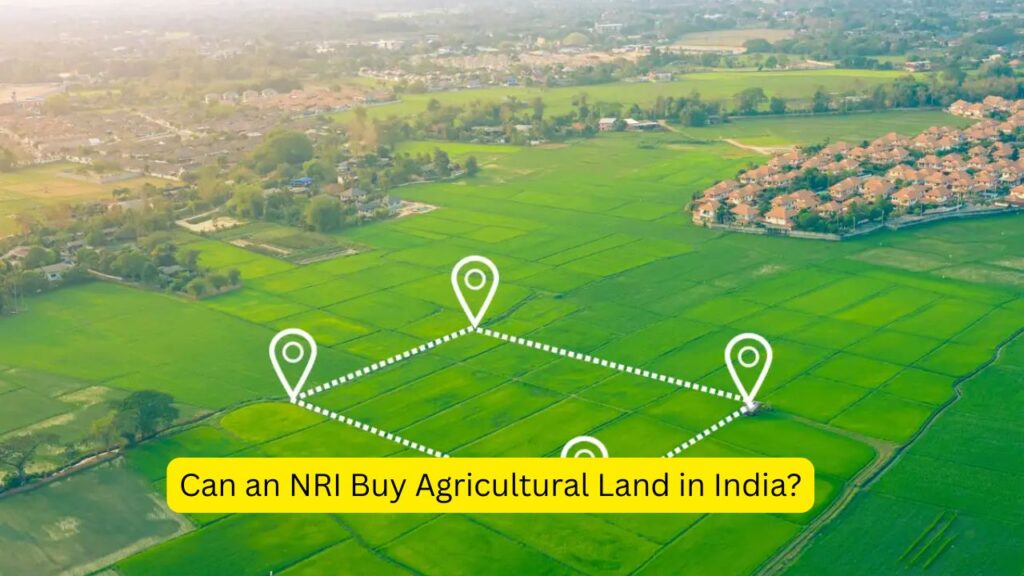
Can an NRI Buy Agricultural Land in India?
Direct Answer Explained
No.
As per RBI and FEMA regulations, an NRI cannot purchase agricultural land, plantation property, or farmhouse in India.
This rule applies regardless of:
- How long you’ve been an NRI
- Whether you plan to return to India
- How much money you’re willing to invest
What RBI and FEMA Say
The Reserve Bank of India clearly restricts NRIs from buying:
- Agricultural land
- Plantation property
- Farmhouses
No special permission is usually granted for purchase.
Why NRIs Are Restricted From Buying Agricultural Land
Protecting Farmers’ Interests
Agricultural land is a sensitive asset in India. The government wants to ensure that:
- Farmers don’t lose land to wealthy investors
- Farming remains accessible to locals
Preventing Land Speculation
Imagine farmland being bought just for price appreciation. That could:
- Increase land prices
- Reduce actual farming
- Harm rural livelihoods
Hence, the restrictions.
Exceptions: When Can an NRI Own Agricultural Land
Now here’s the loophole most people talk about—but it’s not illegal if done right.
Inheritance of Agricultural Land
Yes, an NRI can inherit agricultural land in India.
Conditions:
- The land must be inherited from a person who was a resident Indian
- The inheritance should comply with local state laws
This is the most common and legal way NRIs own farmland.
Gifted Agricultural Land
Agricultural land can be gifted to an NRI, but only by:
- A resident Indian
- A person who is eligible to gift such land under state laws
However, some states restrict gifting too—so local law matters a lot.
Can OCI or PIO Buy Agricultural Land in India?
OCI Rules Explained
OCI cardholders also cannot buy agricultural land in India.
They are treated almost the same as NRIs in this context.
PIO Status and Land Ownership
PIOs (before merger with OCI) were also restricted. So no advantage here either.
State-Wise Variations in Agricultural Land Laws
Why State Laws Matter
Land is a state subject in India. That means:
- Each state can impose additional conditions
- Some states allow only farmers to buy farmland
Examples from Major States
- Maharashtra: Only agriculturists can buy farmland
- Karnataka: Income-based restrictions apply
- Tamil Nadu: No specific farmer condition, but FEMA rules still apply
So even inheritance can get tricky depending on the state.
Can an NRI Convert Agricultural Land to Non-Agricultural?
Legal Possibilities
If an NRI inherits agricultural land, converting it to non-agricultural (NA) land may be possible.
Approval Process
- Application to local revenue authorities
- Compliance with zoning laws
- Payment of conversion charges
Once converted, selling or developing the land becomes easier.
Buying Agricultural Land Through an Indian Resident
Benami Transactions Explained
Buying land in someone else’s name is called a benami transaction—and it’s illegal.
Even if:
- It’s your relative
- You paid the money
- There’s an informal agreement
It can land you in serious legal trouble.
Legal Risks Involved
- Confiscation of property
- Heavy penalties
- Criminal prosecution
Not worth the risk. Ever.
Tax Implications for NRIs Owning Agricultural Land
Income Tax Rules
- Agricultural income is generally tax-free in India
- But income from non-agricultural use is taxable
Capital Gains Tax
If you sell inherited agricultural land:
- Capital gains tax may apply
- Tax rate depends on holding period
Always consult a tax expert.
Documents Required for Agricultural Land Ownership
Identity and Residency Proof
- Passport
- PAN card
- OCI card (if applicable)
Land-Related Documents
- Title deed
- Encumbrance certificate
- Mutation records
Paperwork matters—a lot.
Selling Agricultural Land Owned by an NRI
Who Can Buy It
An NRI can sell agricultural land only to:
- A resident Indian
- Someone eligible under state laws
Repatriation of Sale Proceeds
- Sale proceeds can usually be credited to NRO account
- Repatriation limits apply
Common Myths About NRIs and Agricultural Land
Myth vs Reality
- ❌ “NRIs can buy farmland with permission”
✅ Mostly false - ❌ “Buying in wife’s name is safe”
✅ Still illegal if benami - ❌ “OCI holders have special rights”
✅ Not for agricultural land
Important Legal Tips for NRIs
Due Diligence Checklist
- Verify land title
- Check state-specific laws
- Confirm inheritance legality
When to Consult a Lawyer
Always. Especially for:
- Inheritance cases
- Conversion of land
- Sale transactions
Think of a lawyer as a seatbelt—boring but life-saving.
Conclusion:-
So, can NRI buy agricultural land in India?
The clear answer is no, not directly. But through inheritance or gifting, ownership is possible—provided all legal conditions are met.
Indian land laws are like a maze. One wrong turn, and you’re stuck. But with the right knowledge, proper advice, and a clean paper trail, NRIs can still manage agricultural land ownership legally and safely.
FAQs:-
1. Can an NRI buy agricultural land with RBI permission?
Generally, no. RBI rarely grants permission for such purchases.
2. Can an NRI inherit agricultural land from parents?
Yes, inheritance is legally allowed.
3. Can an NRI sell inherited agricultural land?
Yes, but only to a resident Indian eligible under state laws.
4. Is agricultural income taxable for NRIs?
Pure agricultural income is tax-free, but exceptions apply.
5. Can an NRI convert agricultural land to residential land?
Yes, subject to state laws and approvals.